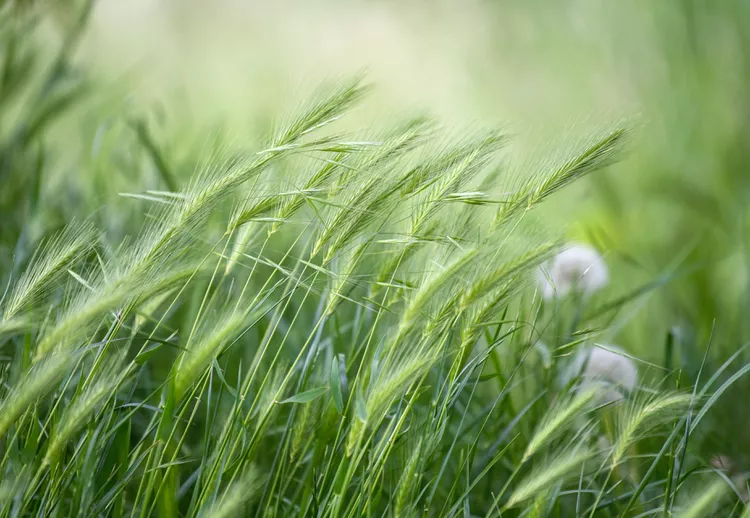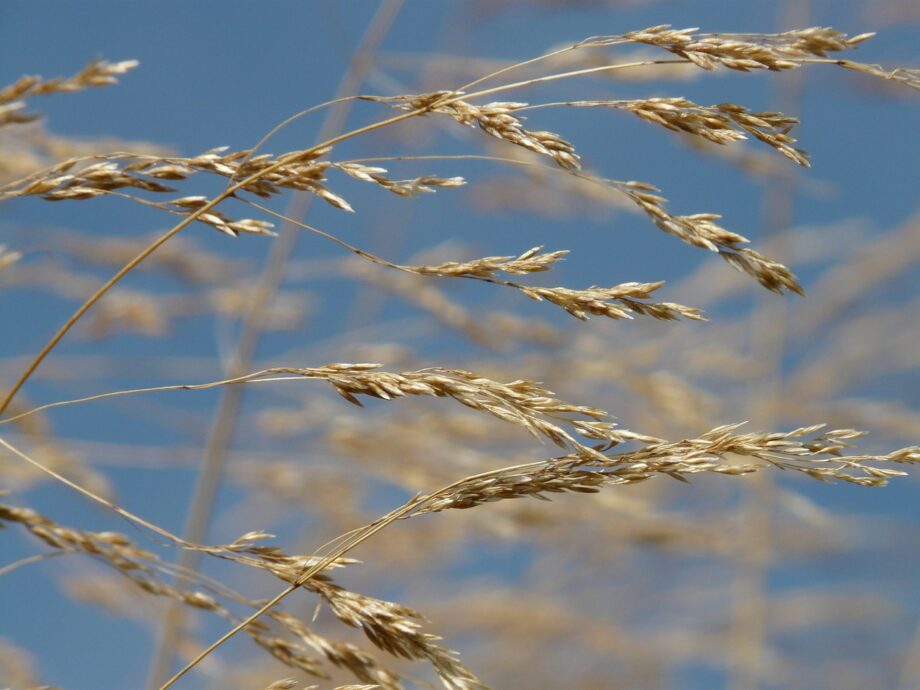
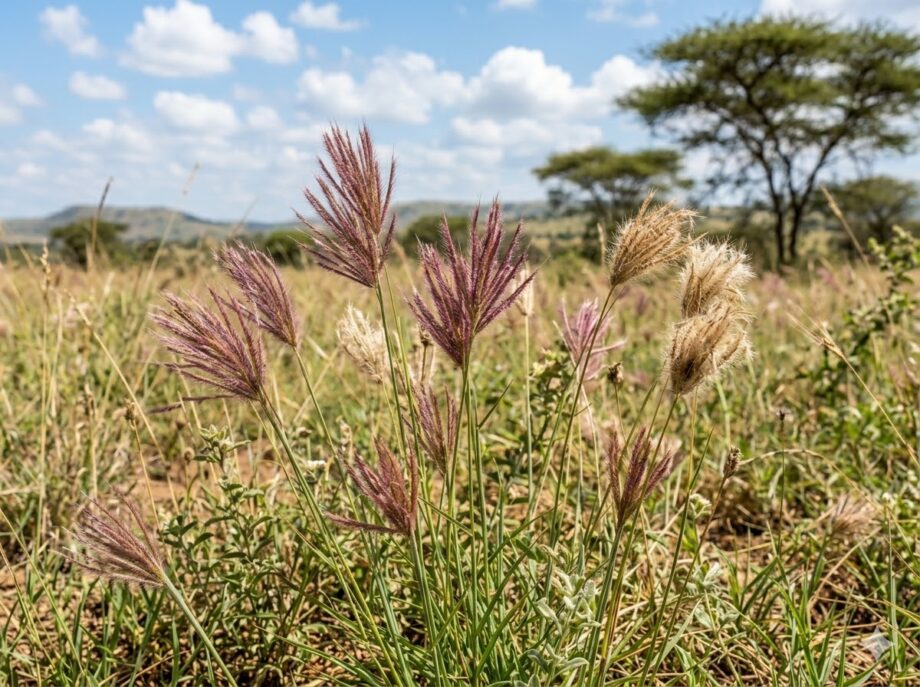
Chloris roxburghiana, commonly known as horsetail grass or windmill grass, is a hardy perennial grass widely found in arid and semi-arid regions of Africa, particularly in Kenya. It plays an important role in rangeland restoration, livestock feeding, and soil conservation.
This guide explores everything you need to know about Chloris roxburghiana, including its ecology, agronomic practices, nutritional value, yield potential, and key advantages and limitations.
Ecology of Chloris Roxburghiana
Adaptation And Distribution
Chloris roxburghiana thrives in dryland ecosystems, making it a valuable grass for ASAL (Arid and Semi-Arid Lands).
- Grows at 0–1500 meters above sea level
- Requires 500–625 mm annual rainfall
- Common in open grasslands, bushlands, and degraded rangelands
Soil And Environmental Conditions
- Prefers sandy loam and well-drained soils, but tolerates rocky and alluvial soils
- Highly drought tolerant and survives harsh climatic conditions
- Acts as a pioneer species, colonizing abandoned or degraded land
Ecological Importance
- Helps in soil stabilization and erosion control
- Contributes to rangeland rehabilitation
- Provides ground cover, reducing weed invasion over time
Agronomy of Chloris Roxburghiana
Establishment
- Can be established through:
- Broadcasting seeds
- Drilling in furrows
- Best planting time:
- Just before the rainy season
- Example (Kenya):
- October rains (Southern rangelands)
- March rains (Northern regions)
Management Practices
- Weed control is critical during early growth stages
- Once established, it:
- Forms dense stands
- Suppresses weeds naturally
- Shows high germination capacity, leading to rapid ground coverage
Harvesting
- Seeds should be harvested:
- When panicles turn brown (straw color)
- Before seed shattering occurs
Nutritional Value
Chloris roxburghiana is valued as livestock forage, especially for grazing animals.
Key Nutritional Composition
- Crude protein: 7–16% (higher at early growth stages)
- Crude fibre: 25–30%
- Digestibility: ~65–68% for ruminants
Feeding Characteristics
- Highly palatable, especially when young
- Readily grazed by livestock
- Often overgrazed due to preference
Suitability
- Best suited for:
- Cattle
- Sheep
- Goats
Yield Potential
Biomass Yield
- Average dry matter yield:
- ~9.9 tons/ha/year under good conditions
Seed Characteristics
The seeds of Chloris roxburghiana are small, light, and adapted for natural dispersal by wind and animals. They are typically enclosed within the grass’s distinctive finger-like seed heads (panicles), which resemble a windmill hence the name windmill grass.
- Seed size: Very small and lightweight
- Color: Brown to straw-colored when mature
- Structure: Found on radiating spikes (digitate inflorescence)
- Dormancy: Minimal, allowing relatively quick germination under favorable conditions
Seed Yield
- Typical seed yield:
- Around 35 kg/ha under standard conditions
- Under controlled moisture conditions:
- Up to 633 kg/ha at 30% field capacity
Comparative Performance
- Compared to other native grasses:
- Often shows lower biomass and productivity
- Ranks below species like Cenchrus ciliaris and Chloris gayana in yield (DSpace)
Advantages of Chloris roxburghiana
1. Excellent Drought Tolerance
- Survives in low rainfall areas where other grasses fail
2. High Palatability
- Preferred by livestock, improving feed intake
3. Good for Land Rehabilitation
- Effective for restoring degraded rangelands
4. Rapid Establishment
- High germination rates and quick ground cover
5. Soil Conservation Benefits
- Reduces erosion and improves soil structure
Disadvantages of Chloris roxburghiana
1. Lower Biomass Yield
- Produces less forage compared to improved pasture species
2. Overgrazing Risk
- Highly palatable, making it prone to depletion without proper management
3. Limited Ecological Flexibility
- Performs best in specific dryland conditions and may not adapt well elsewhere
4. Moderate Nutritional Value
- Protein levels decline as the plant matures
Uses of Chloris roxburghiana
- Grazing pasture for livestock
- Hay production (though less common than other grasses)
- Rangeland reseeding programs
- Soil erosion control and land restoration
Conclusion
Chloris roxburghiana is a resilient and ecologically valuable grass for dryland farming systems. While it may not match the productivity of improved forage species, its drought tolerance, palatability, and soil restoration benefits make it an essential component of sustainable rangeland management in regions like Kenya.
For farmers and land managers operating in arid and semi-arid areas, this grass offers a reliable, low-input forage option—especially when integrated with other high-yielding species for balanced pasture systems.