Buffalo grass is one of the most drought-tolerant, low-maintenance warm-season grasses available today. Whether you are looking for a tough lawn grass for dry climates, a soft turf for landscaping, or a sustainable alternative to high-water lawns, buffalo grass seeds are the best option to buy and plant.
In this comprehensive guide, you will learn everything about buffalo grass, including buffalo grass seed, buffalo grass lawn care, buffalo grass vs Bermuda grass, mowing height, watering needs, plugs, sod, fertilizer schedules, common problems, and how to grow a thick green buffalo turf successfully.
What Is Buffalo Grass?
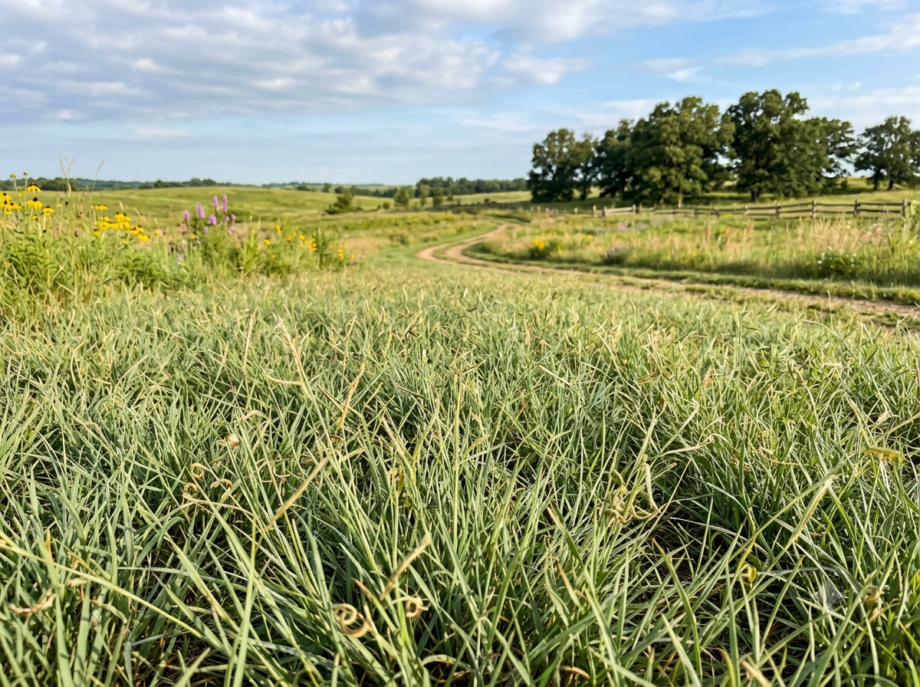
Buffalo grass is a warm-season perennial turfgrass native to North America. Scientifically known as Bouteloua dactyloides, it evolved naturally across dry prairies and plains where rainfall was limited.
Unlike thirsty lawn grasses, buffalo grass thrives in:
- Hot climates
- Drought-prone regions
- Full sun environments
- Poor soils
- Low-maintenance landscapes
Because of its exceptional drought resistance, buffalo grass has become increasingly popular for eco-friendly lawns, parks, sports landscapes, and sustainable landscaping projects.
Buffalo Grass Characteristics
Key Features of Buffalo Grass
| Feature | Details |
|---|---|
| Grass Type | Warm-season perennial |
| Scientific Name | Bouteloua dactyloides |
| Texture | Fine to medium |
| Color | Blue-green to gray-green |
| Growth Habit | Spreading via stolons |
| Drought Tolerance | Excellent |
| Shade Tolerance | Moderate to low |
| Maintenance | Low |
| Water Requirements | Very low |
| Mowing Frequency | Minimal |
Buffalo Grass Lawn Benefits
Buffalo grass lawns offer several advantages compared to traditional turfgrass varieties.
1. Exceptional Drought Tolerance
One of the biggest reasons homeowners choose buffalo grass is its ability to survive with very little water.
Buffalo grass can remain green using significantly less irrigation than many cool-season grasses. This makes it ideal for:
- Water-restricted regions
- Dry climates
- Sustainable landscaping
- Low-water lawn designs
2. Low Maintenance Grass
Buffalo grass is often called a “lazy lawn” because it requires:
- Less mowing
- Less watering
- Less fertilizer
- Less pest control
For homeowners looking for a low-maintenance lawn grass, buffalo grass is one of the best choices available.
3. Soft Lawn Texture
Modern buffalo grass varieties are softer than older native strains. Many improved cultivars provide a dense, carpet-like turf suitable for residential lawns.
4. Eco-Friendly Turfgrass
Buffalo grass supports sustainable landscaping because it reduces:
- Water consumption
- Chemical fertilizer use
- Carbon emissions from mowing
- Soil erosion
This makes buffalo grass ideal for xeriscaping and environmentally friendly lawn care.
Buffalo Grass Seeds
Choosing The Best Buffalo Grass Seeds
When shopping, look for:
- Certified seed
- Weed-free seed blends
- Drought-resistant cultivars
- Region-specific varieties
Popular buffalo grass seed varieties include:
- Legacy buffalo grass
- Prestige buffalo grass
- Cody buffalo grass
- Bowie buffalo grass
- UC Verde buffalo grass
Buffalo Grass Seeds Germination
Buffalo grass seeds germination depends on warm soil temperatures.
Ideal Conditions
| Factor | Requirement |
|---|---|
| Soil Temperature | 60–80°F |
| Sunlight | Full sun |
| Watering | Light and consistent |
| Germination Time | 14–30 days |
Buffalo Grass Plugs
Buffalo grass plugs are small-rooted plants spaced across a lawn area. They spread over time to form a complete lawn.
Advantages of Buffalo Grass Plugs
- Faster establishment than seed
- Better weed resistance
- Improved uniformity
- Easier establishment in difficult soils
Buffalo grass plugs are commonly used for residential lawns and commercial landscapes.
Buffalo Grass Sod
This offers the fastest way to establish a lawn.
Benefits of Buffalo Grass Sod
- Instant lawn appearance
- Faster erosion control
- Immediate weed suppression
- Quicker establishment
However, buffalo grass sod is generally more expensive than seed or plugs.
How To Plant Buffalo Grass
Step 1: Soil Preparation
Prepare the planting area by:
- Removing weeds
- Loosening compacted soil
- Adding compost if needed
- Leveling the surface
Buffalo grass prefers well-draining soil but tolerates clay and sandy conditions.
Step 2: Planting Buffalo Grass Seed
Spread buffalo grass seed evenly using a broadcast spreader.
Recommended Seeding Rate
- 2–3 pounds per 1,000 square feet
Lightly rake the seed into the soil.
Step 3: Watering After Planting
Keep the soil moist during germination.
Once established, buffalo grass requires minimal watering.
Buffalo Grass Lawn Care
Buffalo Grass Watering
Established buffalo grass lawns require much less water than traditional turfgrass.
Watering Schedule
| Lawn Stage | Watering Frequency |
|---|---|
| Newly Seeded | Daily light watering |
| Establishment Phase | 2–3 times weekly |
| Mature Lawn | Deep watering every 1–2 weeks |
Buffalo grass can go dormant during extreme drought and recover once moisture returns.
Mowing Height
Buffalo grass can be maintained as either:
- A manicured turf lawn
- A natural prairie-style lawn
Recommended Mowing Height
| Lawn Style | Height |
|---|---|
| Formal Lawn | 2–3 inches |
| Natural Lawn | 4–5 inches |
One major benefit is reduced mowing frequency compared to Bermuda or Kentucky bluegrass.
Buffalo Grass Fertilizer Requirements
Buffalo grass thrives with minimal fertilizer.
Fertilizer Tips
- Apply low-nitrogen fertilizer
- Fertilize once or twice yearly
- Avoid excessive nitrogen
- Compost can improve soil naturally
Too much fertilizer may encourage weeds and excessive growth.
Buffalo Grass vs Bermuda Grass
Many homeowners compare buffalo grass with Bermuda grass before choosing a lawn type.
Comparison
| Feature | Buffalo Grass | Bermuda Grass |
|---|---|---|
| Water Needs | Very low | Moderate |
| Maintenance | Low | High |
| Growth Speed | Moderate | Aggressive |
| Drought Tolerance | Excellent | Very good |
| Mowing Frequency | Low | High |
| Texture | Soft | Medium-coarse |
| Traffic Tolerance | Moderate | Excellent |
Buffalo grass is better for low-maintenance lawns, while Bermuda grass performs better under heavy traffic.
Buffalo Grass vs Zoysia Grass
Key Differences
| Feature | Buffalo Grass | Zoysia Grass |
|---|---|---|
| Water Use | Very low | Moderate |
| Shade Tolerance | Lower | Better |
| Growth Rate | Moderate | Slow |
| Maintenance | Low | Moderate |
| Texture | Soft | Dense |
Best Climate For Buffalo Grass
Buffalo grass performs best in:
- Hot summers
- Low rainfall areas
- Full sun conditions
- USDA zones 3–9
It is especially popular in:
- Texas
- Colorado
- Kansas
- Nebraska
- Oklahoma
- Dry regions worldwide
Buffalo Grass for Dogs
Buffalo grass is considered relatively pet-friendly because it:
- Handles moderate traffic
- Requires fewer chemicals
- Stays soft underfoot
However, large active dogs may damage thin buffalo lawns in shaded areas.
Buffalo Grass Problems
Although buffalo grass is low maintenance, it can still face challenges.
Common Buffalo Grass Problems
1. Weed Invasion
Thin lawns may develop weeds if:
- Mowing is too short
- Overwatering occurs
- Establishment is poor
2. Shade Stress
Buffalo grass struggles in heavy shade.
Most varieties need at least 6–8 hours of sunlight daily.
3. Poor Drainage
Excess moisture can cause:
- Fungal diseases
- Root rot
- Thin turf
Buffalo Grass Weeds Control
To reduce weeds in buffalo grass lawns:
- Mow properly
- Avoid overwatering
- Use pre-emergent herbicides carefully
- Maintain dense turf coverage
Healthy buffalo grass naturally suppresses many weeds.
Buffalo Grass Dormancy
Buffalo grass becomes dormant during:
- Cold winters
- Extended drought periods
Dormant buffalo grass turns tan or brown temporarily before greening up again in warm conditions.
Buffalo Grass Maintenance Calendar
Spring
- Remove debris
- Light fertilization
- Begin mowing
Summer
- Minimal watering
- Monitor weeds
- Mow occasionally
Fall
- Reduce mowing
- Prepare for dormancy
Winter
- Dormant period
- Minimal maintenance
Best Buffalo Grass Varieties
Legacy Buffalo Grass
Known for:
- Dense turf
- Rich green color
- Improved cold tolerance
UC Verde Buffalo Grass
Popular in warm climates due to:
- Excellent heat tolerance
- Low water requirements
- Fine texture
Prestige Buffalo Grass
Praised for:
- Disease resistance
- Soft appearance
- Attractive lawn quality
Buffalo Grass Landscaping Ideas
Buffalo grass works beautifully in:
- Xeriscaping
- Prairie gardens
- Sustainable lawns
- Modern landscaping
- Native grass landscapes
It pairs well with:
- Native wildflowers
- Drought-tolerant shrubs
- Decorative stones
- Low-water irrigation systems
Is Buffalo Grass Good For Lawns?
Yes. Buffalo grass is one of the best low-water lawn grasses available.
It is especially suitable for homeowners who want:
- Lower lawn maintenance
- Reduced water bills
- Sustainable landscaping
- Natural lawn aesthetics
However, it may not be ideal for:
- Heavy shade
- High sports traffic
- Extremely humid environments
Frequently Asked Questions About Buffalo Grass
Does buffalo grass spread?
Yes. Buffalo grass spreads through stolons, gradually forming a dense turf.
Is buffalo grass invasive?
Buffalo grass spreads naturally but is generally not considered invasive like Bermuda grass.
How often should you mow buffalo grass?
Most buffalo grass lawns require mowing only every 2–3 weeks during the peak growing season.
Can buffalo grass grow in shade?
Buffalo grass prefers full sun and struggles in dense shade.
Is buffalo grass drought-tolerant?
Yes. Buffalo grass is among the most drought-tolerant turfgrasses available.
What is the best fertilizer for buffalo grass?
A low-nitrogen fertilizer applied sparingly works best.
Can you overseed buffalo grass?
Yes. Overseeding may help thicken thin lawns.
Is buffalo grass good for pets?
Yes. Buffalo grass is soft, durable, and safer because it requires fewer chemicals.
How long does buffalo grass take to establish?
- Seed: 2–3 months
- Plugs: 3–6 months
- Sod: Immediate coverage
Final Thoughts On Buffalo Grass
Buffalo grass seeds remain one of the top choices for drought-resistant, eco-friendly, and low-maintenance lawns. With proper establishment and basic care, a buffalo grass lawn can provide years of attractive, sustainable turf while dramatically reducing water and maintenance costs.
Whether you are planting buffalo grass seed, installing buffalo grass sod, or using buffalo grass plugs, this resilient warm-season grass offers a smart long-term solution for homeowners seeking beautiful lawns with less work.
For anyone searching for a sustainable lawn alternative, buffalo grass deserves serious consideration.
Related Posts;