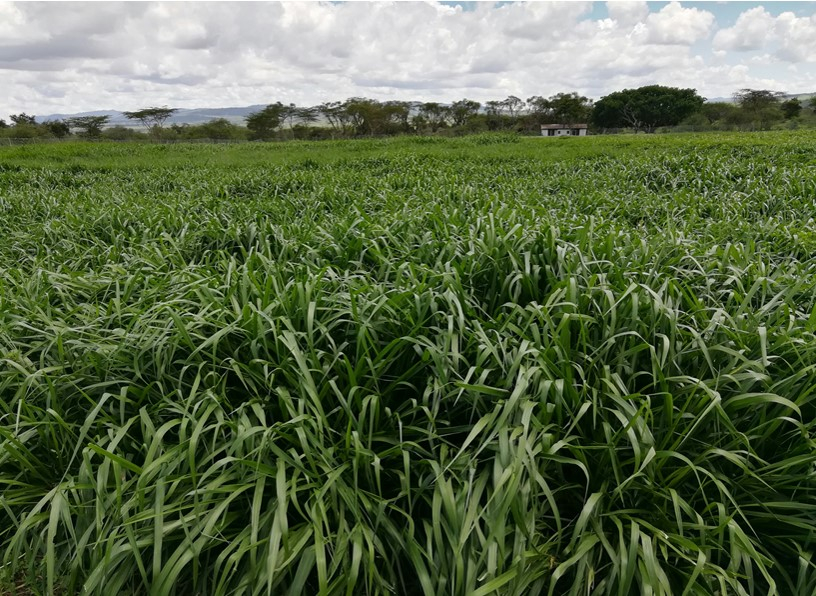
What Is Brachiaria Grass?
Brachiaria Grass is one of the fastest-growing and most productive fodder grasses in Kenya today. It is widely adopted by dairy farmers, beef farmers, and livestock keepers because of its:
- High biomass production
- Excellent drought tolerance
- High nutritional value
- Fast regrowth after cutting
- Ability to improve milk production
Brachiaria grass performs exceptionally well in many parts of Kenya, including:
- Rift Valley
- Western Kenya
- Central Kenya
- Eastern Kenya
- Coastal regions with moderate rainfall
The grass has become increasingly popular due to climate change and the rising demand for quality livestock feed.
Why Brachiaria Grass Is Popular in Kenya
1. High Milk Production
Dairy farmers report increased milk yields after introducing Brachiaria into cattle feeding programs. The grass contains higher protein content compared to Napier grass.
2. Drought Resistant
Brachiaria survives dry seasons better than many traditional fodder grasses. This makes it ideal for semi-arid regions in Kenya.
3. Fast Regrowth
After harvesting, the grass regenerates quickly, allowing multiple harvests annually.
4. Suitable for Cut-and-Carry Systems
Most small-scale dairy farmers in Kenya use zero-grazing systems. Brachiaria works perfectly in these systems.
5. Controls Soil Erosion
Its deep root system helps stabilize soil and improve soil fertility.
Types of Brachiaria Grass Grown in Kenya
1. Brachiaria Mulato II

This is the most common variety in Kenya.
Features:
- High leaf production
- Soft and palatable
- Excellent for dairy cows
- Good drought resistance
2. Brachiaria Cayman

Known for:
- Strong disease resistance
- High yields
- Adaptability to different soils
3. Brachiaria Basilisk

Popular because of:
- Fast establishment
- Strong root system
- Good grazing tolerance
Brachiaria Grass Seeds in Kenya

Farmers can purchase certified Brachiaria seeds from:
- Agrovet shops
- Seed companies
- Livestock research institutions
- Online agricultural suppliers
Some reputable seed suppliers include:
Always buy certified seeds to ensure:
- High germination rates
- Disease-free planting material
- Better yields
Brachiaria Grass Seeds Price in Kenya
Brachiaria seed prices in Kenya vary depending on:
- Seed variety
- Seed quality
- Supplier
- Quantity purchased
Average Brachiaria Seed Prices in Kenya
| Seed Quantity | Estimated Price Range |
|---|---|
| 1 KG | KSh 1,500 – KSh 3,500 |
| 5 KG | KSh 7,000 – KSh 15,000 |
| 10 KG | KSh 14,000 – KSh 28,000 |
Prices may fluctuate depending on the season and seed availability.
Seed Rate Per Acre
Farmers generally require:
- 4–6 KG of Brachiaria seeds per acre
This depends on:
- Planting method
- Seed purity
- Germination percentage
How To Plant Brachiaria Grass Seeds
Step 1: Land Preparation


Proper land preparation is critical for successful germination.
Recommended Process:
- Clear bushes and weeds
- Plough the land thoroughly
- Harrow to achieve fine soil texture
- Level the field if necessary

Brachiaria seeds are very small, so the soil should be fine and smooth.
Step 2: Soil Requirements
Brachiaria grows best in:
- Well-drained soils
- Loamy soils
- Moderately fertile soils
Ideal Soil pH:
6.0 \leq pH \leq 7.5
Avoid waterlogged areas because excessive moisture can damage roots.
Step 3: Planting Time
The best planting season in Kenya is:
- Beginning of long rains
- Beginning of short rains
This ensures adequate moisture during germination.
Step 4: Seed Planting/Planting Depth


1\text{ cm} \leq d \leq 2\text{ cm}
Do not plant too deeply because Brachiaria seeds are small.
Spacing Recommendations
| Planting Method | Recommended Spacing |
|---|---|
| Row planting | 50 cm between rows |
| Broadcasting | Even distribution |
Planting Procedure
- Mix seeds with sand for uniform distribution
- Sow evenly
- Cover lightly with soil
- Roll or press the soil gently
Fertilizer Requirements for Brachiaria Grass
Brachiaria responds well to fertilizer application.
Recommended Fertilizers
During Planting
- DAP fertilizer
- Farmyard manure
After Establishment
- CAN fertilizer
- Urea
Organic manure also improves:
- Soil structure
- Moisture retention
- Nutrient availability
Weed Control And Management Tips
Weeds compete with young Brachiaria plants.
- Weed during early establishment
- Use manual weeding where possible
- Avoid herbicide overuse
After establishment, Brachiaria suppresses weeds naturally.
Irrigation Requirements
Although drought-tolerant, irrigation improves growth during dry seasons.
Best Practice:
- Water immediately after planting
- Maintain moderate moisture during germination
Avoid excessive watering.
Brachiaria Grass Harvesting


First Harvest
The first harvest is usually ready after:
90\text{ days} \leq t \leq 120\text{ days}
Depending on rainfall and management.
Subsequent Harvests
Harvest every:
- 6–8 weeks
Recommended Harvest Height
Cut at:
- 5–10 cm above the ground
This promotes rapid regrowth.
Brachiaria Grass Yield Per Acre in Kenya
Well-managed Brachiaria can produce:
- 15–25 tons of fodder per acre annually
Yield depends on:
- Rainfall
- Fertilizer application
- Weed control
- Variety planted
Brachiaria Grass For Silage
Brachiaria is excellent for silage production because it:
- Has high biomass
- Ferments well
- Maintains nutritional value
Many Kenyan dairy farmers mix Brachiaria with:
- Maize
- Napier grass
- Molasses
to improve silage quality.
Nutritional Value of Brachiaria Grass
Key Nutrients
Brachiaria contains:
- High protein
- Good digestibility
- Energy-rich forage
- Essential minerals
Crude Protein Range
7% \leq CP \leq 15%
Depending on maturity and management.
Common Challenges in Growing Brachiaria Grass
1. Poor Germination
Caused by:
- Deep planting
- Low-quality seeds
- Dry soil
2. Weed Competition
Young Brachiaria plants are vulnerable during establishment.
3. Overgrazing
Continuous grazing weakens regrowth.
4. Waterlogging
Brachiaria dislikes poorly drained soils.
Brachiaria Grass vs Napier Grass
| Feature | Brachiaria | Napier Grass |
|---|---|---|
| Drought tolerance | Excellent | Moderate |
| Protein content | Higher | Lower |
| Water requirement | Lower | Higher |
| Regrowth speed | Fast | Moderate |
| Disease resistance | Strong | Vulnerable to stunt disease |
Is Brachiaria Grass Profitable in Kenya?
Yes. Brachiaria farming can be highly profitable because:
- Dairy farming is expanding
- Demand for fodder is increasing
- Climate-resilient feeds are needed
- Quality fodder improves milk output
Farmers can earn income through:
- Selling fodder
- Selling seeds
- Silage production
- Livestock feeding
Tips for Successful Brachiaria Farming
Best Practices
- Use certified seeds
- Plant during rainy seasons
- Apply manure regularly
- Control weeds early
- Harvest at the correct stage
- Rotate grazing areas
FAQs About Brachiaria Grass in Kenya
Which counties in Kenya are best for growing Brachiaria grass?
Kenya has many regions suitable for Brachiaria farming. The grass performs well in:
- Uasin Gishu
- Nakuru
- Nyeri
- Kiambu
- Bungoma
- Kakamega
- Meru
- Machakos
- Narok
- Trans Nzoia
It can also perform well in semi-arid counties when moisture is managed properly.
Can Brachiaria grass be grown from splits instead of seeds?
Yes. Farmers can propagate Brachiaria using:
- Seeds
- Root splits
- Stem divisions
Planting splits are common when:
- Seeds are expensive
- Farmers have already established pasture
Splits usually establish faster than seeds.
How much rainfall does Brachiaria grass require?
Brachiaria performs best in areas receiving:
700\text{ mm} \leq R \leq 1500\text{ mm annually}
However, some varieties can tolerate lower rainfall conditions.
How often should Brachiaria grass be watered after planting?
During establishment:
- Water lightly and consistently
- Keep soil moist but not waterlogged
After establishment:
- Irrigation is only necessary during prolonged drought.
Can Brachiaria grass be fed to goats and sheep?
Yes. Brachiaria is highly suitable for:
- Dairy cows
- Beef cattle
- Goats
- Sheep
The grass is palatable and nutritious for most ruminants.
Is Brachiaria grass good for zero grazing?
Absolutely. Brachiaria is one of the best grasses for zero-grazing systems because:
- It produces high biomass
- It regrows quickly
- It has soft leaves
- It is highly digestible
How many times can Brachiaria be harvested in a year?
Under good management and sufficient rainfall, farmers can harvest:
5 \leq H \leq 8
times annually.
Does Brachiaria grass require fertilizer every season?
Not always, but fertilizer application improves yields significantly.
Recommended practices include:
- Applying manure after harvest
- Using nitrogen fertilizers for faster regrowth
- Conducting soil testing periodically
Can Brachiaria grow in acidic soils?
Yes. One major advantage of Brachiaria is its tolerance to moderately acidic soils compared to some other pasture grasses.
How long does Brachiaria pasture last?
A well-managed Brachiaria pasture can remain productive for:
5\text{ years} \leq L \leq 10\text{ years}
or even longer with proper management.
What is the best spacing for Brachiaria grass?
Recommended row spacing is:
40\text{ cm} \leq S \leq 60\text{ cm}
This allows proper root development and easier weed management.
Can Brachiaria grass be mixed with legumes?
Yes. Farmers often intercrop Brachiaria with legumes such as:
- Desmodium
- Lucerne
- Centrosema
This improves:
- Protein content
- Soil nitrogen
- Overall pasture quality
What pests affect Brachiaria grass?
Brachiaria is relatively pest-resistant, but possible problems include:
- Armyworms
- Grasshoppers
- Termites in dry areas
Early monitoring helps prevent major damage.
Does Brachiaria grass suffer from diseases?
Brachiaria is generally disease-tolerant. However, fungal diseases may occur in poorly drained soils or overly humid conditions.
Good drainage reduces disease risks.
Can Brachiaria be used for hay production?
Yes. Brachiaria makes good hay because:
- It dries relatively well
- It retains nutrients
- Livestock accept it readily
Harvesting at the correct stage improves hay quality.
What is the difference between Brachiaria Mulato II and Cayman?
Mulato II
- Softer leaves
- Excellent for dairy feeding
- High palatability
Cayman
- Stronger disease resistance
- Better waterlogging tolerance
- Higher biomass in some conditions
Is Brachiaria grass suitable for a commercial fodder business?
Yes. Many Kenyan farmers now grow Brachiaria commercially for:
- Fresh fodder sales
- Hay production
- Silage production
- Seed multiplication
Demand continues to increase due to dairy expansion.
How can farmers improve Brachiaria yields?
To maximize yields:
- Use certified seeds
- Apply manure regularly
- Harvest on time
- Control weeds early
- Avoid overgrazing
- Use rotational grazing systems
Can Brachiaria grass survive drought?
Yes. Brachiaria is among the most drought-tolerant fodder grasses available in Kenya today.
Its deep root system helps it survive dry periods better than many traditional grasses.
Is Brachiaria grass invasive?
Brachiaria spreads well, but proper pasture management prevents uncontrolled invasion.
Regular harvesting and grazing help maintain control.
How profitable is one acre of Brachiaria grass?
Profitability depends on:
- Market demand
- Livestock numbers
- Rainfall
- Management practices
One acre can support several dairy cows and reduce feed costs significantly, especially during dry seasons.
Can Brachiaria improve soil fertility?
Yes. Brachiaria improves:
- Soil organic matter
- Soil structure
- Moisture retention
Its extensive root system also helps reduce soil erosion.
What is the best harvesting stage for high nutrition?
For the best nutritional quality, harvest Brachiaria:
- Before flowering
- While leaves are still tender
Older grass contains more fiber and lower protein.
Can poultry eat Brachiaria grass?
Brachiaria is mainly used for ruminants, but small amounts may be used as supplemental green feed for some poultry systems.
Is Brachiaria farming suitable for small-scale farmers?
Yes. Small-scale farmers benefit because:
- The grass requires relatively low maintenance
- It reduces feed shortages
- It lowers dairy feeding costs
- It increases milk productivity
How should Brachiaria seeds be stored?
Store seeds in:
- Cool conditions
- Dry places
- Airtight containers
Avoid moisture exposure because it lowers germination rates.
What is the germination rate of certified Brachiaria seeds?
Good certified seeds often achieve:
70% \leq G \leq 90%
Depending on storage and seed quality.
Can Brachiaria grass grow organically?
Yes. Farmers can grow Brachiaria organically using:
- Compost manure
- Farmyard manure
- Organic pest control methods
This is increasingly popular among sustainable dairy farmers.
Final Thoughts
Brachiaria Grass has become one of the most important fodder crops in Kenya due to its high productivity, drought tolerance, and excellent feeding value for livestock.
Whether you are a small-scale dairy farmer or a commercial livestock producer, investing in Brachiaria grass can significantly improve:
- Feed availability
- Milk production
- Livestock health
- Farm profitability
By using certified seeds, proper planting techniques, and good management practices, Kenyan farmers can achieve excellent returns from Brachiaria farming
Related Post;