Choosing the best high-protein grass for cattle is one of the most important decisions for dairy and beef farmers aiming to increase milk yield, weight gain, and overall herd health.
In tropical and subtropical regions like Kenya, grasses alone often fall short in protein, so selecting the right species or combining grasses with legumes is critical for optimal nutrition.
Most tropical grasses contain only 7–12% crude protein, which is often below the requirement for high-producing dairy cows (about 15%+ crude protein needed) unless properly managed or supplemented (FAOHome).
However, certain improved grasses and grass–legume systems can achieve much higher protein levels, significantly improving productivity.
Below is a complete breakdown of the highest protein grasses for cattle.
What Makes A Grass “High Protein” For Cattle?
A grass is considered high-protein when it has:
- Crude protein (CP) above 12–20%
- High leaf-to-stem ratio (young leafy growth)
- Good digestibility (low fiber/lignin)
- Fast regrowth after cutting or grazing
Legumes and mixed pastures often outperform pure grasses because they naturally fix nitrogen and increase protein levels in the soil and forage.
Best High-Protein Grass for Cattle (Top-Ranked Species)
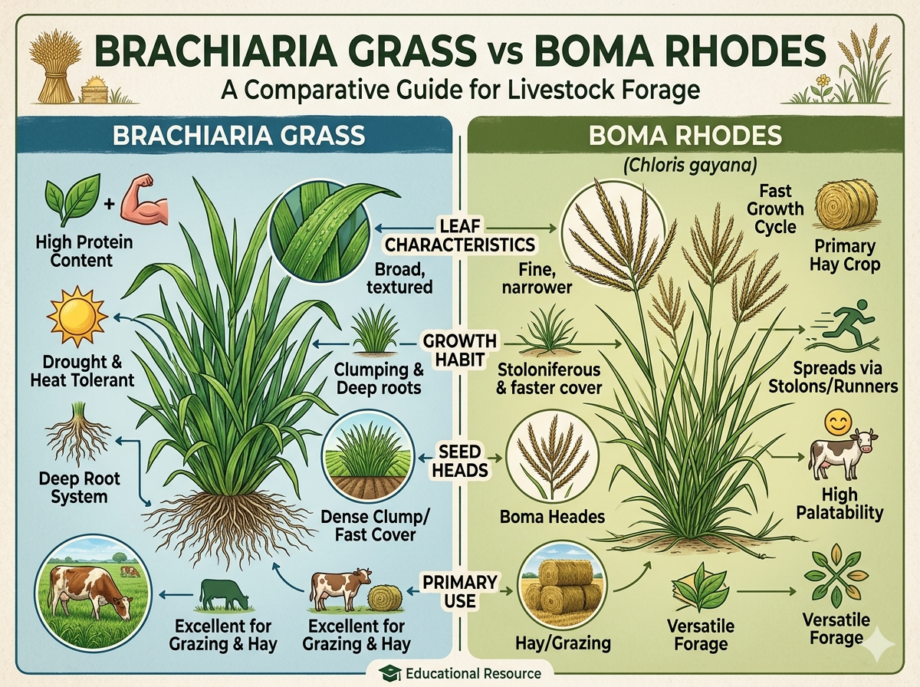
1. Brachiaria Grass (Mulato II, Cayman, Marandu)
Brachiaria is widely considered the best high-protein grass for cattle in tropical farming systems due to its balance of protein, drought tolerance, and biomass production.
- Crude protein: 9–20% depending on management (livestockkenya.com)
- Highly digestible compared to Napier grass
- Performs well in low-fertility soils
- Suitable for zero grazing and rotational grazing
Why farmers prefer Brachiaria:
- Improves milk yield in dairy cows
- Tolerates drought better than Napier
- Faster regrowth and persistent productivity
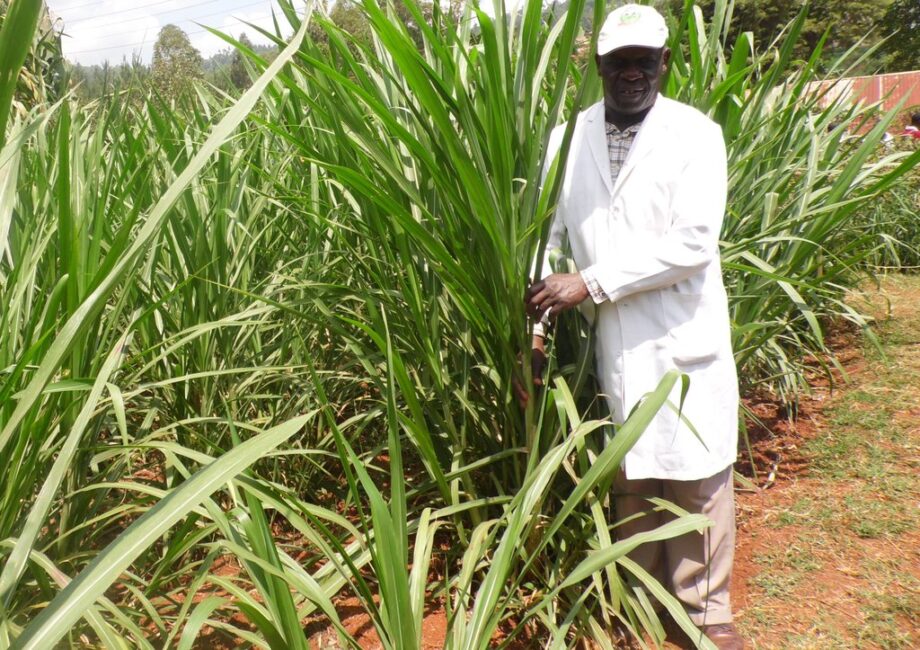
2. Napier Grass (Elephant Grass / Super Napier / Pakchong)
Napier grass is the most common dairy fodder grass in Kenya and East Africa.
- Crude protein: 5–12% (higher when young) (kalroerepository.kalro.org)
- Very high biomass yield
- Excellent for cut-and-carry feeding systems
Key Limitation:
- Protein drops quickly as it matures
- Requires supplementation (legumes or concentrates)
Best Use:
- Dairy zero-grazing systems
- Silage production
3. Guinea Grass (Megathyrsus Maximus)
Guinea grass is a high-yield tropical fodder grass with good protein levels when well managed.
- Crude protein: 10–16% in good soils
- Very leafy and palatable
- Excellent for grazing systems
Benefits:
- High intake by cattle
- Good drought tolerance
- Suitable for beef fattening systems
4. Rhodes Grass (Chloris Gayana)
Rhodes grass is one of the best drought-resistant, high-protein grasses for cattle feed in dry areas.
- Good hay production
- Moderate protein levels (8–14%)
- Excellent persistence in semi-arid zones
Why it’s popular:
- Ideal for ASAL regions in Kenya
- Produces high-quality hay for dry-season feeding
5. Kikuyu Grass (Pennisetum Clandestinum)
Kikuyu grass is a high-protein pasture grass in high-rainfall regions.
- Crude protein: up to 20% in young regrowth
- Very palatable and nutrient-dense
- Best for dairy cows under intensive grazing
Limitations:
- Not drought-tolerant
- Requires fertile soils and moisture
Best High-Protein Grass-Legume Mix for Cattle (Highest Nutrition Option)
Pure grasses rarely meet high protein needs for dairy cattle. The best solution is grass + legume intercropping.
Best Combinations:
- Brachiaria + Desmodium
- Napier + Lucerne (Alfalfa)
- Rhodes Grass + Clover
- Guinea Grass + Stylo
Legumes such as Lucerne can contain 18–25% crude protein, significantly boosting feed quality (ahdb.org.uk).
Why grass-legume systems are superior:
- Higher milk production
- Better weight gain in beef cattle
- Improved soil fertility through nitrogen fixation (FAOHome)
High-Protein Grass For Dairy Cows vs Beef Cattle
For dairy cows:
Best options:
- Brachiaria
- Kikuyu grass
- Napier + Lucerne mix
Focus: milk production + digestibility
For beef cattle:
Best options:
- Guinea grass
- Rhodes grass
- Brachiaria
Focus: weight gain + biomass
How To Increase Protein Content In Grass For Cattle
Even low-protein grasses can become high-quality feed with proper management:
1. Harvest at the right stage
- Cut young (4–8 weeks of growth)
- Avoid over-mature grass
2. Add nitrogen fertilizer
- Boosts crude protein content significantly
3. Mix with legumes
- Desmodium, Lucerne, Stylo, Clover
4. Proper irrigation and soil management
- Improves leaf quality and protein retention
Benefits of High-Protein Grass For Cattle
- Increased milk yield in dairy cows
- Faster weight gain in beef cattle
- Improved fertility and reproduction
- Reduced the need for expensive commercial feed
- Better rumen function and digestion
Final Takeaway
The best high-protein grass for cattle is not just one species—it depends on your system:
- Best overall: Brachiaria grass (balanced protein + resilience)
- Best for dairy milk: Kikuyu + Napier + Lucerne mix
- Best for beef fattening: Guinea grass + Rhodes grass
- Highest nutrition system: Grass–legume integrated pasture
For maximum productivity, the winning strategy is not monoculture; it’s managed mixed pastures with legumes to boost protein.
Related Post;